




- Home > News > Product News
OPS Interface Explained | GHOT OPS Module Technical Guide
OPS Interface Explained | GHOT OPS Module Technical Guide
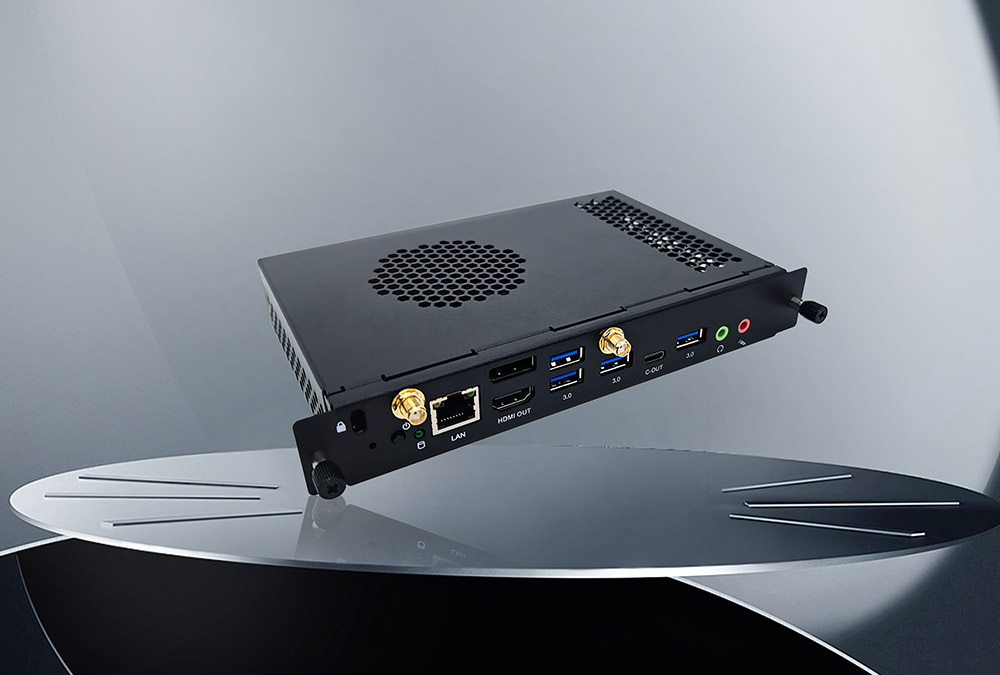
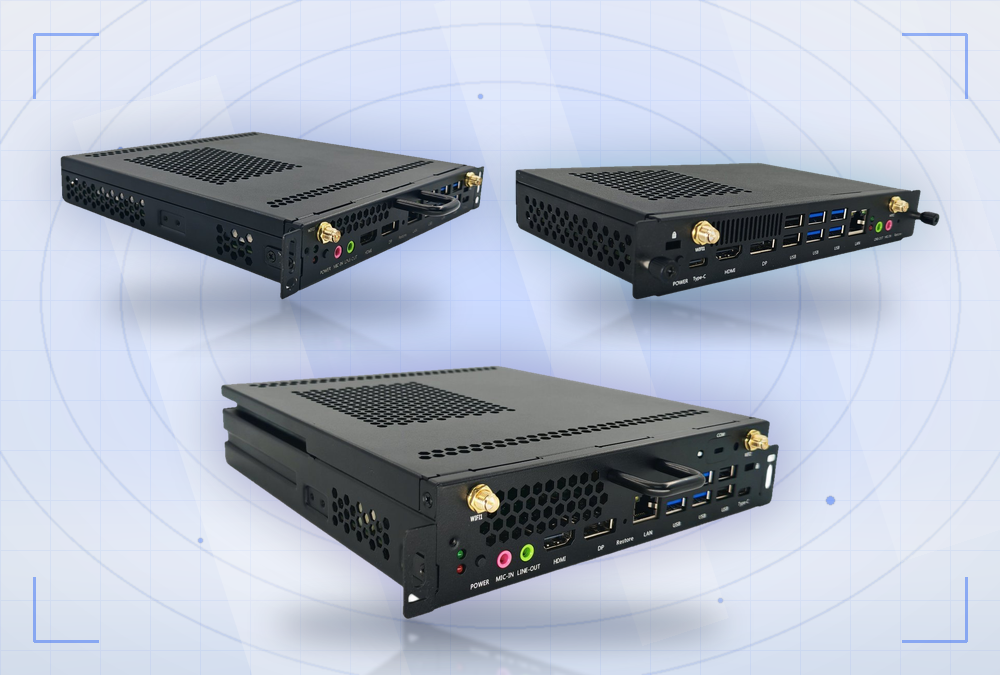
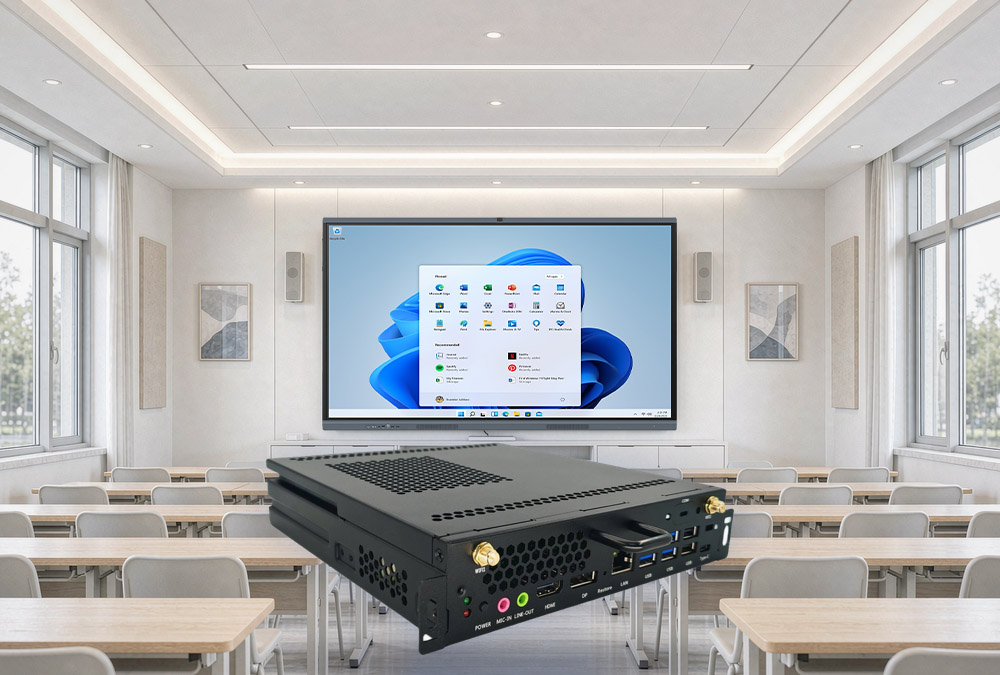
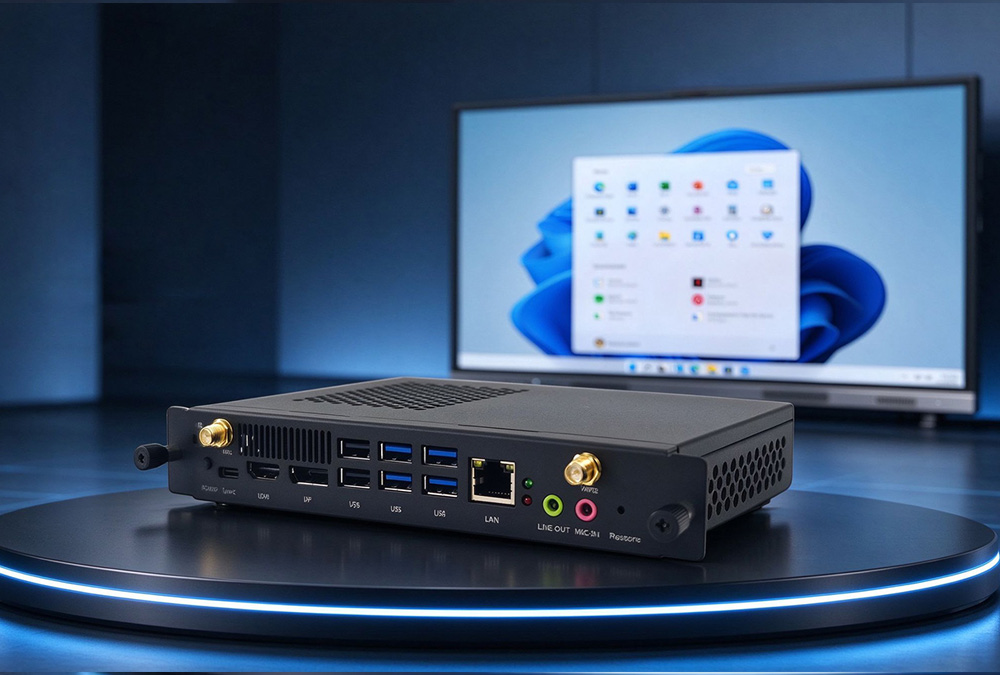
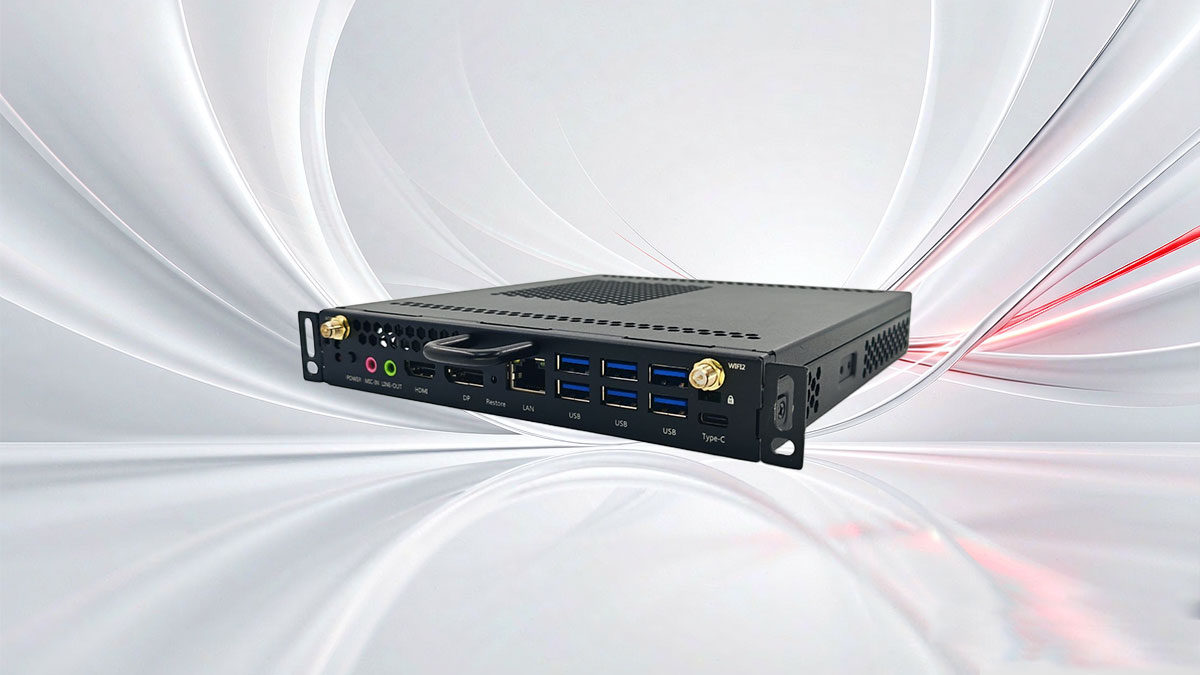
OPS (Open Pluggable Specification) defines the universal pluggable computing interface widely adopted for interactive flat panels, smart blackboards and commercial displays. It standardizes mechanical form factor, connector definition and signal wiring, enabling simple installation, swapping and maintenance of OPS PCs. GHOT designs and manufactures both international standard OPS and domestic OPS-C modules to serve global integrators and education & commercial display projects.
Physical Dimensions: Standard OPS vs OPS-C
Two mainstream form factors are available on the market:
International Standard OPS: 120×180×30mm. This is the global baseline specification for export projects, compatible with most overseas interactive displays.
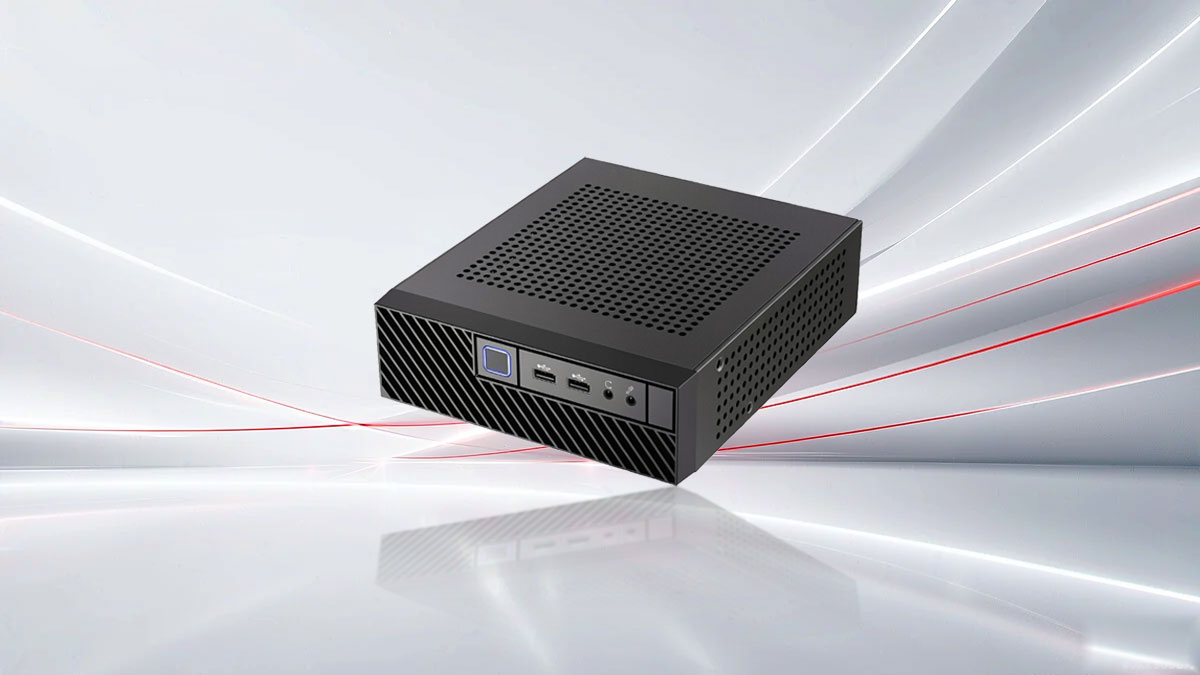
OPS-C (China-market variant): 195×180×42/30mm. Optimized for domestic education smart blackboards and meeting panels, with larger internal space for enhanced power dissipation and richer expansion capacity.
The difference in size is critical for selection. A standard OPS module cannot fit into an OPS-C slot, and vice versa. GHOT provides pre-sales technical support to help customers confirm cabinet size before ordering.
80-pin JAE TX25 Connector & Pinout
The core hardware interface is the “80-pin JAE TX25 connector”, the defined electrical interconnect for OPS modules. This single integrated connector consolidates all signals between the display panel and pluggable OPS PC, eliminating messy separate cables.
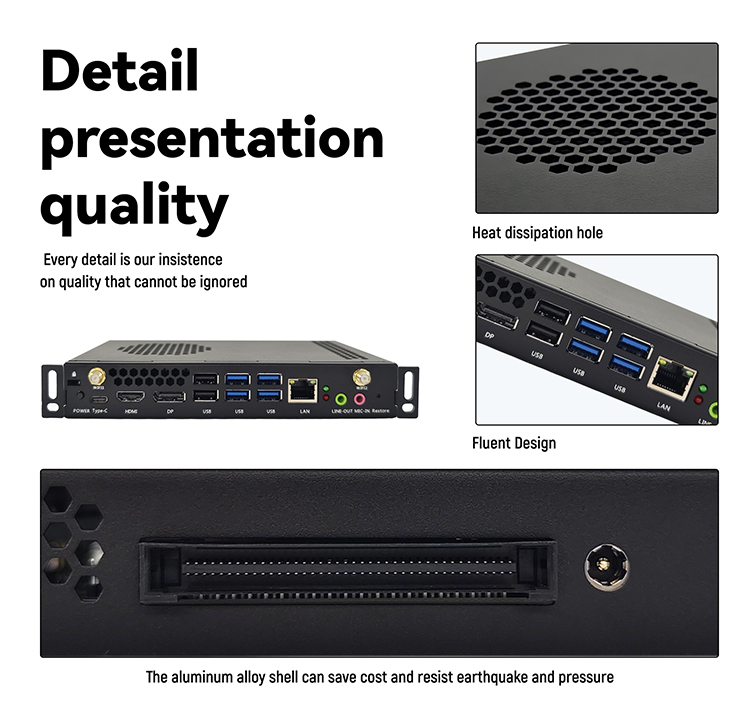
The pins are grouped into four major signal categories:
1. Power supply pins: Deliver stable power from the display backplane to the OPS module.
2. Video signal pins: Transmit display output for 4K/HD video and graphic rendering.
3. USB signal pins: Carry USB channels for touch input, cameras, microphones and peripheral devices.
4. Control & audio pins: Transmit audio signals, power on/off, reset and panel communication commands.
This all-in-one connector architecture is the foundation of OPS’s plug-and-play advantage.
Mechanical & Electrical Differences: Global OPS and China OPS-C
While both versions adopt the 80-pin JAE TX25 connector, they differ substantially in mechanical structure and electrical design:
Mechanical: OPS-C features wider and deeper casing. It has modified mounting holes and slide-in positioning structure, tailored to the slot design of Chinese commercial and education displays.
Electrical: OPS-C adds upgraded power circuits and dedicated hardware reset signals to meet higher continuous load requirements for long-hour classroom operation. Some pin definitions for power and control circuits are adjusted for the domestic market.
Key note: Connector pin layout is not fully cross-compatible. Simply swapping standard OPS and OPS-C may cause power mismatch or function failure, even if physically forced into the slot.
GHOT OPS Technical Support for Integrators
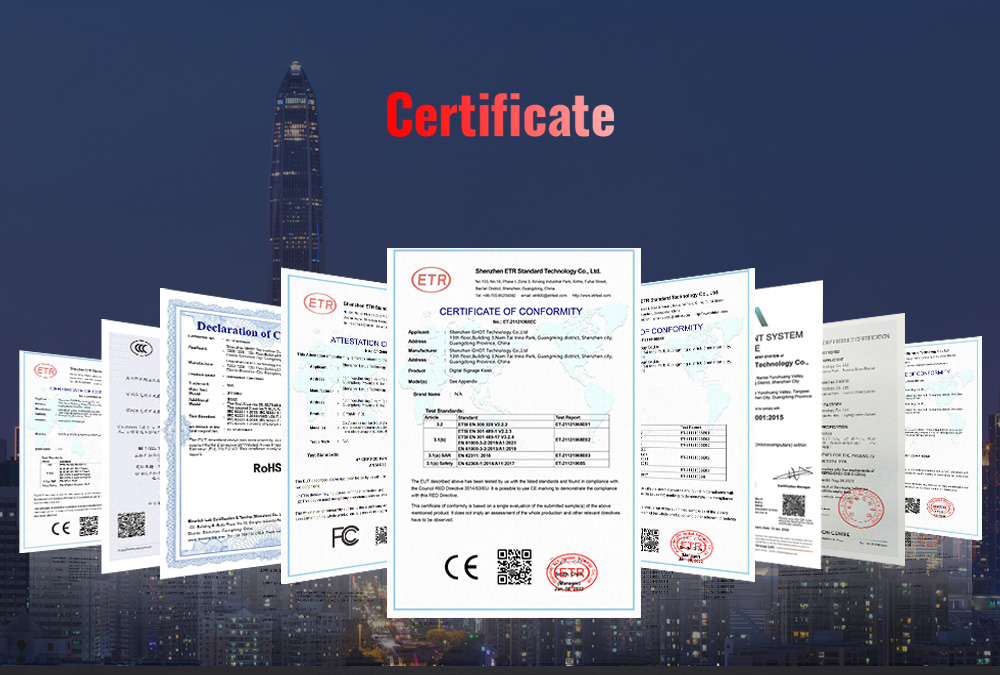
GHOT supplies both standard OPS and OPS-C modules, with full pinout documentation, dimensional drawings and technical datasheets for your product integration. We support OEM customization, pre-testing with your display hardware and large-volume project delivery, with complete certification packages for bidding and customs clearance.
Contact our engineering team to get OPS pinout diagrams and specification sheets for your interactive flat panel or smart blackboard project.ects.
Related Cases
MORE >-
![field.arcurl}]()
OPS PC for Meeting Intera
GHOT OPS PC is pluggable computing module for interactive meeting flat panels. It enables smooth video conference, wireless c
-
![field.arcurl}]()
OPS Interface Explained |
Full technical breakdown of OPS interface: dimensions of standard OPS and OPS-C,GHOT offers OPS & OPS-C modules for commercial and education displays.
-
![field.arcurl}]()
Inside GHOT's Factory: Ho
Take a tour of GHOT‘s 6,000 m² factory: dust-free workshops, aging lines, transport vibration testing and multiple Production
-
![field.arcurl}]()
OPS PC Supplier Audit Che
In the wave of digital audio revolution, “Walk Play” APP with its cutting-edge technology brings USB Type-C digital hea
-
![field.arcurl}]()
What Is an OPS Computer?
An OPS computer is a pluggable PC module that turns any interactive display into a full Windows workstation. Learn how OPS wo
-
![field.arcurl}]()
GHOT OPS PC | OPS Module
GHOT OPS computer powers interactive flat panels & smart blackboards for classrooms. Enjoy seamless Android/Windows dual syst
-
![field.arcurl}]()
About GHOT | Shenzhen Man
GHOT Technology is a Shenzhen-based manufacturer of OPS computers,OPS PC,Mini PC, industrial PCs and Interactive displays — 6
-
![field.arcurl}]()
GHOT Company History | Mi
From founding in 2012 to ISO certifications, automated lines and global trade — explore the development history of Shenzhen G
-
![field.arcurl}]()
GHOT OPS Computer | OEM/O
GHOT OPS computers support Intel Core i3-i9, 4K 38402160@60Hz, gigabit LAN, dual-band Wi-Fi, dual copper heat sinks and optio
-
![field.arcurl}]()
Verified Quality: GHOT Ce
See how GHOT’s complete certification portfolio mitigates compliance risks in bidding and customs clearance for hassle-free p